关联关系详解
关联关系是指数据模型之间的连接关系,通过关联字段将不同模型的数据关联起来,实现数据之间的逻辑连接。
新建关联关系时,系统会在两个数据模型中分别建立关联字段,用于存储关联数据的 _id。
⚠️ 注意:MySQL 数据模型中的关联关系字段是通过中间表进行关联的,因此不能直接通过 SQL 的 JOIN 语句进行查询。需要使用数据模型提供的关联查询方法来获取关联数据。
常见的关联关系场景:
-
学生属于某个班级(学生 → 班级)
- 学生模型关联字段:所属班级
- 班级模型关联字段:学生列表
-
文章有多个评论(文章 → 评论)
- 文章模型关联字段:评论列表
- 评论模型关联字段:所属文章
-
用户有一个个人资料(用户 → 个人资料)
- 用户模型关联字段:个人资料
- 个人资料模型关联字段:所属用户
支持的数据库类型
| 数据库类型 | 支持的关联关系 |
|---|---|
| 数据库(文档型) | 一对一、一对多、多对一 |
| 数据库(MySQL) | 一对一、一对多、多对一、多对多 |
| 自有 MySQL 数据库 | 一对一、一对多、多对一、多对多 |
关联关系类型
一对一(1:1)
一个记录只能关联另一个模型的一个记录,双方都是唯一对应关系。
示例: 用户 ↔ 个人资料
// 用户模型
{
    name: "张三",
    profile: {
        _id: "profile_123"
    }
}

// 个人资料模型
{
    _id: "profile_123",
    avatar: "avatar.jpg",
    bio: "个人简介"
}
一对多(1:N)
一个记录可以关联另一个模型的多个记录。
示例: 班级 ↔ 学生
// 班级模型
{
    name: "一年级1班",
    students: [
        { _id: "student_1" },
        { _id: "student_2" }
    ]
}
多对一(N:1)
多个记录关联另一个模型的一个记录。
示例: 学生 ↔ 班级
// 学生模型
{
    name: "小明",
    class: {
        _id: "class_123"
    }
}
多对多(M:N)
多个记录可以关联另一个模型的多个记录。
示例: 学生 ↔ 课程
// 学生模型
{
    name: "小明",
    courses: [
        { _id: "course_1" }, // 语文
        { _id: "course_2" }  // 数学
    ]
}
关联关系操作
在使用关联关系时,需要注意数据格式和错误处理。无论是在客户端还是服务端(云函数)环境中,操作方式基本一致。
💡 注意:所有关联字段操作都需要使用
{_id: "xxx"}格式,其中xxx为关联数据的_id,无需传入其他字段。
查询操作
💡 注意:对于 MySQL 数据库,关联查询必须使用数据模型提供的查询方法,不支持直接使用 SQL JOIN 语句。
⚠️ 重要限制:关联查询目前只支持 一层关联,不支持多层嵌套的关联查询。
关联查询层级限制说明
支持的查询(一层关联):
// ✅ 正确:查询文章及其关联的作者信息(一层关联)
const { data } = await models.post.get({
  filter: {
    where: { _id: { $eq: "post_123" } },
  },
  select: {
    _id: true,
    title: true,
    author: {
      // 关联字段:一层
      _id: true,
      name: true,
      email: true,
      profile: true, // 非关联字段,可以查询
    },
  },
});
不支持的查询(多层关联):
// ❌ 错误:多层嵌套关联查询不生效
const { data } = await models.post.get({
  filter: {
    where: { _id: { $eq: "post_123" } },
  },
  select: {
    title: true,
    author: {
      // 第一层关联
      name: true,
      profile: {
        // ❌ 第二层关联:不支持
        address: {
          // ❌ 第三层关联:不支持
          city: true,
        },
      },
    },
  },
});
// 查询结果中 profile.address 将不会返回数据
区分关联字段和普通字段:
// ✅ 正确:在关联字段中查询普通字段(非关联字段)
const { data } = await models.post.get({
  filter: {
    where: { _id: { $eq: "post_123" } },
  },
  select: {
    title: true,
    author: {
      // 关联字段(一层)
      name: true,
      email: true,
      avatar: true, // 普通字段
      bio: true, // 普通字段
      // 以上都是 author 模型的普通字段,不是关联字段
    },
  },
});
多层关联的替代方案:
如果需要查询多层关联数据,需要分步查询:
// 方案1:分步查询
// 第一步:查询文章和作者
const post = await models.post.get({
  filter: { where: { _id: { $eq: "post_123" } } },
  select: {
    title: true,
    author: {
      _id: true,
      name: true,
      profileId: true, // 获取 profile 的 ID
    },
  },
});

// 第二步:根据 profileId 查询 profile 详情
if (post.data.author.profileId) {
  const profile = await models.profile.get({
    filter: { where: { _id: { $eq: post.data.author.profileId } } },
    select: {
      address: {
        city: true,
        street: true,
      },
    },
  });

  // 手动组合数据
  post.data.author.profile = profile.data;
}
// 方案2:数据冗余
// 在 author 模型中冗余常用的 profile 信息
{
    _id: "author_123",
    name: "张三",
    email: "zhang@example.com",
    profileId: "profile_456",  // 关联字段
    city: "北京",              // 冗余字段:来自 profile.address.city
    bio: "个人简介"            // 冗余字段:来自 profile.bio
}

// 这样可以在一层查询中获取所需信息
const { data } = await models.post.get({
    filter: { where: { _id: { $eq: "post_123" } } },
    select: {
        title: true,
        author: {
            name: true,
            city: true,  // 冗余的 city 字段
            bio: true    // 冗余的 bio 字段
        }
    }
});
查询结果包含关联数据
// 查询文章及其评论(一层关联)
const { data } = await models.post.get({
  filter: {
    where: {
      _id: { $eq: "post_123" },
    },
  },
  select: {
    _id: true,
    title: true,
    content: true,
    // 包含关联的评论数据(一层关联)
    comments: {
      _id: true,
      content: true,
      createdAt: true,
    },
  },
});
根据关联条件过滤
// 查询有评论的文章
const { data } = await models.post.list({
  filter: {
    relateWhere: {
      comments: {
        where: {
          content: { $nempty: true },
        },
      },
    },
  },
  select: {
    _id: true,
    title: true,
    comments: {
      content: true,
    },
  },
});
创建操作
创建记录时可以同时建立关联关系:
// 创建学生并关联班级和课程
const { data } = await models.student.create({
  data: {
    name: "小明",
    age: 8,
    // 关联班级(多对一)
    class: {
      _id: "class_123",
    },
    // 关联多个课程(多对多)
    courses: [{ _id: "course_1" }, { _id: "course_2" }],
  },
});
更新操作
更新一对一关联
// 客户端/云函数:更新用户的个人资料关联
const { data } = await models.user.update({
  filter: {
    where: {
      _id: { $eq: "user_123" },
    },
  },
  data: {
    profile: {
      _id: "profile_456",
    },
  },
});
// 云函数中使用 doc() 方法的写法
exports.main = async (event) => {
  const { userId, profileId } = event;

  try {
    const result = await cloudbase
      .model("user")
      .doc(userId)
      .update({
        profile: {
          _id: profileId,
        },
      });

    return { success: true, result };
  } catch (error) {
    if (error.code === "INVALID_RELATION_FORMAT") {
      return {
        success: false,
        message: '关联字段格式错误,请使用 {_id: "xxx"} 格式',
      };
    }
    throw error;
  }
};
更新一对多关联
// 客户端/云函数:更新班级的学生列表
const { data } = await models.class.update({
  filter: {
    where: {
      _id: { $eq: "class_123" },
    },
  },
  data: {
    students: [
      { _id: "student_1" },
      { _id: "student_2" },
      { _id: "student_3" },
    ],
  },
});
// 云函数示例:从参数批量处理
exports.main = async (event) => {
  const { classId, studentIds } = event;

  try {
    const result = await cloudbase
      .model("class")
      .doc(classId)
      .update({
        students: studentIds.map((id) => ({ _id: id })),
      });

    return { success: true, result };
  } catch (error) {
    if (error.code === "INVALID_RELATION_FORMAT") {
      return {
        success: false,
        message: '关联字段格式错误,数组中每项需要使用 {_id: "xxx"} 格式',
      };
    }
    throw error;
  }
};
更新多对多关联
// 客户端/云函数:更新学生选课
const { data } = await models.student.update({
  filter: {
    where: {
      _id: { $eq: "student_123" },
    },
  },
  data: {
    courses: [{ _id: "course_1" }, { _id: "course_2" }],
  },
});
// 云函数示例:更新学生选课
exports.main = async (event) => {
  const { studentId, courseIds } = event;

  try {
    const result = await cloudbase
      .model("student")
      .doc(studentId)
      .update({
        courses: courseIds.map((id) => ({ _id: id })),
      });

    return { success: true, result };
  } catch (error) {
    if (error.code === "INVALID_RELATION_FORMAT") {
      return {
        success: false,
        message: '关联字段格式错误,请使用 {_id: "xxx"} 格式的数组',
      };
    }
    throw error;
  }
};
添加关联数据
向已有的关联列表中添加新的关联记录:
// 向已有学生添加新课程
// 第一步:查询当前课程列表
const student = await models.student.get({
  filter: {
    where: { _id: { $eq: "student_123" } },
  },
  select: {
    courses: true,
  },
});

const currentCourses = student.data.courses || [];

// 第二步:检查是否已存在,避免重复
const courseExists = currentCourses.some((c) => c._id === "course_3");
if (!courseExists) {
  // 第三步:更新课程列表
  await models.student.update({
    filter: {
      where: { _id: { $eq: "student_123" } },
    },
    data: {
      courses: [...currentCourses, { _id: "course_3" }],
    },
  });
}
// 云函数封装示例
exports.main = async (event) => {
  const { studentId, newCourseId } = event;

  try {
    // 先查询当前课程列表
    const student = await cloudbase.model("student").doc(studentId).get();
    const currentCourses = student.data.courses || [];

    // 添加新课程(避免重复)
    const courseExists = currentCourses.some((c) => c._id === newCourseId);
    if (courseExists) {
      return { success: false, message: "课程已存在" };
    }

    // 更新课程列表
    const result = await cloudbase
      .model("student")
      .doc(studentId)
      .update({
        courses: [...currentCourses, { _id: newCourseId }],
      });

    return { success: true, result };
  } catch (error) {
    console.error("添加课程失败", error);
    throw error;
  }
};
移除关联数据
从关联列表中移除指定的关联记录:
// 移除学生的某门课程
// 第一步:查询当前课程列表
const student = await models.student.get({
  filter: {
    where: { _id: { $eq: "student_123" } },
  },
  select: {
    courses: true,
  },
});

const currentCourses = student.data.courses || [];

// 第二步:过滤掉要移除的课程
const updatedCourses = currentCourses.filter((c) => c._id !== "course_2");

// 第三步:更新课程列表
await models.student.update({
  filter: {
    where: { _id: { $eq: "student_123" } },
  },
  data: {
    courses: updatedCourses,
  },
});
// 云函数封装示例
exports.main = async (event) => {
  const { studentId, courseId } = event;

  try {
    // 先查询当前课程列表
    const student = await cloudbase.model("student").doc(studentId).get();
    const currentCourses = student.data.courses || [];

    // 过滤掉要移除的课程
    const updatedCourses = currentCourses.filter((c) => c._id !== courseId);

    // 更新课程列表
    const result = await cloudbase.model("student").doc(studentId).update({
      courses: updatedCourses,
    });

    return { success: true, result };
  } catch (error) {
    console.error("移除课程失败", error);
    throw error;
  }
};
删除操作
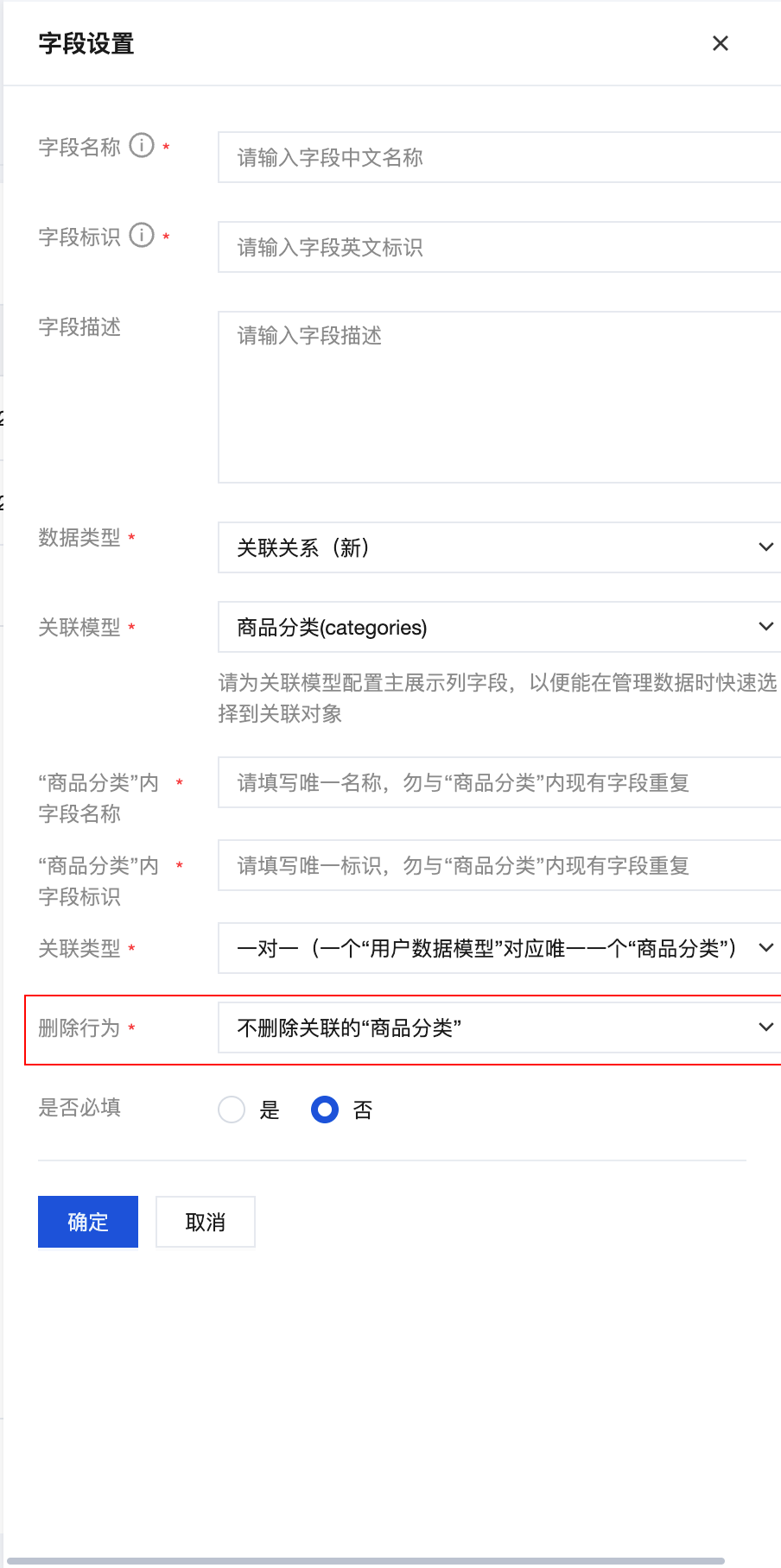
配置关联关系时,可以设置不同的删除行为:
- 删除关联模型数据:删除主记录时,同时删除关联的记录
- 不删除关联模型数据:仅删除主记录,保留关联记录
- 禁止删除存在关联关系的数据:如果存在关联记录,则禁止删除主记录
关联字段限制说明
字段长度限制
⚠️ 注意:关联字段存储的是
_id值,存在以下长度限制:
| 限制项 | 最大长度 | 说明 |
|---|---|---|
单个 _id | 256 字节 | 单个关联记录的 ID 长度限制 |
| 一对多/多对多数组 | 1024 字节 | 存储多个 _id 的数组总长度限制 |
| 图片 CloudID | 100-200+ 字节 | 云存储图片 ID 可能较长,需特别注意 |
多对多关联数量限制
对于多对多关系,由于总长度限制为 1024 字节,关联记录数量受到限制:
单个 _id 长度 | 最大关联数量 | 说明 |
|---|---|---|
| 20 字节 | 约 50 个 | ObjectId 标准长度 |
| 36 字节 | 约 28 个 | UUID 格式 |
| 10 字节 | 约 100 个 | 自定义短 ID |
建议:
- 对于需要大量关联的场景(如用户收藏的商品数量可能超过 100 个),建议使用独立的关联表
- 使用自定义短 ID 可以增加关联数量
- 评估业务场景的实际需求,选择合适的方案
多对多中间表操作
对于 MySQL 数据模型的多对多关系,系统会自动创建中间表。虽然不支持直接 SQL JOIN,但可以通过以下方式操作中间表。
查找中间表名称
示例:学生(student)和课程(course)的多对多关系
- 中间表结构:
course_student├── course_id (外键)├── student_id (外键)└── created_at (创建时间)
查询中间表数据
虽然不支持直接 JOIN,但可以通过数据模型的关联查询获取关联数据:
// 查询学生及其选修的所有课程
const { data } = await models.student.get({
  filter: {
    where: {
      _id: { $eq: "student_123" },
    },
  },
  select: {
    _id: true,
    name: true,
    courses: {
      _id: true,
      courseName: true,
      credits: true,
    },
  },
});

// 结果包含完整的关联数据
console.log(data.courses);
// [
//   { _id: "course_1", courseName: "数学", credits: 4 },
//   { _id: "course_2", courseName: "英语", credits: 3 }
// ]
反向查询
// 查询课程及选修该课程的所有学生
const { data } = await models.course.get({
  filter: {
    where: {
      _id: { $eq: "course_1" },
    },
  },
  select: {
    _id: true,
    courseName: true,
    students: {
      _id: true,
      name: true,
      age: true,
    },
  },
});

console.log(data.students);
// [
//   { _id: "student_1", name: "张三", age: 20 },
//   { _id: "student_2", name: "李四", age: 21 }
// ]
使用关联条件查询
// 查询选修了"数学"课程的所有学生
const { data } = await models.student.list({
  filter: {
    relateWhere: {
      courses: {
        where: {
          courseName: { $eq: "数学" },
        },
      },
    },
  },
  select: {
    _id: true,
    name: true,
    courses: {
      courseName: true,
    },
  },
});
故障排查
关联字段更新失败
错误1:格式错误
错误信息:Invalid relation field format 或 关联字段格式不正确
原因:未使用 {_id: "xxx"} 格式
错误示例:
// ❌ 错误:直接传字符串
await models.student.update({
  filter: { where: { _id: { $eq: "student_123" } } },
  data: { class: "class_456" }, // 错误格式
});

// ❌ 错误:传入完整对象
await models.student.update({
  filter: { where: { _id: { $eq: "student_123" } } },
  data: {
    class: {
      _id: "class_456",
      name: "一年级1班", // 不需要传入其他字段
    },
  },
});
正确示例:
// ✅ 正确:使用 {_id: "xxx"} 格式
await models.student.update({
  filter: { where: { _id: { $eq: "student_123" } } },
  data: {
    class: {
      _id: "class_456",
    },
  },
});
错误2:数组格式错误
错误信息:Expected array of objects with _id field
原因:一对多或多对多关系中,数组格式不正确
错误示例:
// ❌ 错误:直接传字符串数组
await models.student.update({
  filter: { where: { _id: { $eq: "student_123" } } },
  data: {
    courses: ["course_1", "course_2"], // 错误格式
  },
});
正确示例:
// ✅ 正确:数组中每项使用 {_id: "xxx"} 格式
await models.student.update({
  filter: { where: { _id: { $eq: "student_123" } } },
  data: {
    courses: [{ _id: "course_1" }, { _id: "course_2" }],
  },
});
错误3:关联数据不存在
错误信息:Related record not found 或 关联记录不存在
原因:关联的 _id 在目标模型中不存在
排查步骤:
- 检查关联的
_id是否正确 - 在目标模型中查询该记录是否存在
- 确认
_id的拼写和格式是否正确
解决方法:
// 先验证关联记录是否存在
const classExists = await models.class.get({
  filter: { where: { _id: { $eq: "class_456" } } },
});

if (classExists.data) {
  // 记录存在,可以安全关联
  await models.student.update({
    filter: { where: { _id: { $eq: "student_123" } } },
    data: { class: { _id: "class_456" } },
  });
} else {
  console.error("关联的班级不存在");
}
错误4:字段长度超出限制
错误信息:Relation field length exceeds limit 或 字段长度超出限制
原因:
- 单个
_id超过 256 字节 - 一对多/多对多数组总长度超过 1024 字节
解决方法:参考上文「关联字段限制说明」部分的解决方案
关联查询结果为空
原因1:权限配置问题
关联模型的权限配置独立于主模型,需要分别设置。
排查步骤:
- 检查主模型的权限配置
- 检查关联模型的权限配置
- 确认当前用户是否有权限访问关联数据
示例:
// 查询文章及评论,但评论权限不足时,评论数据为空
const { data } = await models.post.get({
  filter: { where: { _id: { $eq: "post_123" } } },
  select: {
    title: true,
    comments: {
      // 如果评论模型权限不足,此处返回空数组
      content: true,
    },
  },
});
解决方法:
- 在控制台检查关联模型的权限设置
- 确保当前用户有读取关联模型数据的权限
- 或在云函数中使用管理员权限进行查询
原因2:关联数据确实不存在
排查步骤:
- 在控制台直接查看主记录的关联字段值
- 检查关联字段是否为空或包含无效的
_id - 在关联模型中查询对应的记录是否存在
解决方法:
// 先查询主记录,检查关联字段
const post = await models.post.get({
  filter: { where: { _id: { $eq: "post_123" } } },
  select: { comments: true },
});

console.log("关联的评论ID:", post.data.comments);
// 检查是否为空数组或包含无效ID

// 验证关联记录是否存在
const commentIds = post.data.comments.map((c) => c._id);
const comments = await models.comment.list({
  filter: {
    where: {
      _id: { $in: commentIds },
    },
  },
});

console.log("实际存在的评论:", comments.data);
原因3:select 字段配置错误
错误示例:
// ❌ 错误:未在 select 中包含关联字段
const { data } = await models.post.get({
  filter: { where: { _id: { $eq: "post_123" } } },
  select: {
    title: true,
    content: true,
    // 缺少 comments 字段,不会返回关联数据
  },
});
正确示例:
// ✅ 正确:在 select 中明确指定关联字段
const { data } = await models.post.get({
  filter: { where: { _id: { $eq: "post_123" } } },
  select: {
    title: true,
    content: true,
    comments: {
      // 必须明确指定关联字段
      _id: true,
      content: true,
    },
  },
});
原因4:多层关联查询不支持
关联查询目前只支持一层关联,多层嵌套关联不会返回数据。
错误示例:
// ❌ 错误:多层关联查询不返回数据
const { data } = await models.post.get({
  filter: { where: { _id: { $eq: "post_123" } } },
  select: {
    title: true,
    author: {
      // 第一层关联 ✅
      name: true,
      profile: {
        // ❌ 第二层关联:不支持,不会返回数据
        address: {
          // ❌ 第三层关联:不支持
          city: true,
        },
      },
    },
  },
});

// 查询结果:
// {
//   title: "文章标题",
//   author: {
//     name: "张三"
//     // profile 字段不会返回
//   }
// }
正确示例:
// ✅ 正确:只查询一层关联
const { data } = await models.post.get({
  filter: { where: { _id: { $eq: "post_123" } } },
  select: {
    title: true,
    author: {
      // 一层关联 ✅
      _id: true,
      name: true,
      email: true,
      bio: true, // 普通字段可以正常查询
    },
  },
});
解决方法:参考上文「关联查询层级限制说明」中的分步查询或数据冗余方案
多对多关系操作异常
问题:无法找到中间表
原因:对于 MySQL 数据模型,中间表由系统自动创建和管理
解决方法:
- 不需要手动创建中间表
- 使用数据模型提供的关联查询方法
- 不要尝试直接通过 SQL JOIN 查询中间表
问题:中间表数据不一致
原因:直接修改了中间表数据,导致关联关系不一致
解决方法:
- 始终通过数据模型的更新方法修改关联关系
- 不要直接操作中间表数据
- 如果数据不一致,通过数据模型的更新方法重新设置关联关系
// ✅ 正确:通过数据模型更新关联关系
await models.student.update({
  filter: { where: { _id: { $eq: "student_123" } } },
  data: {
    courses: [{ _id: "course_1" }, { _id: "course_2" }],
  },
});

// ❌ 错误:不要直接操作中间表
// await db.query("INSERT INTO course_student ...");  // 不推荐